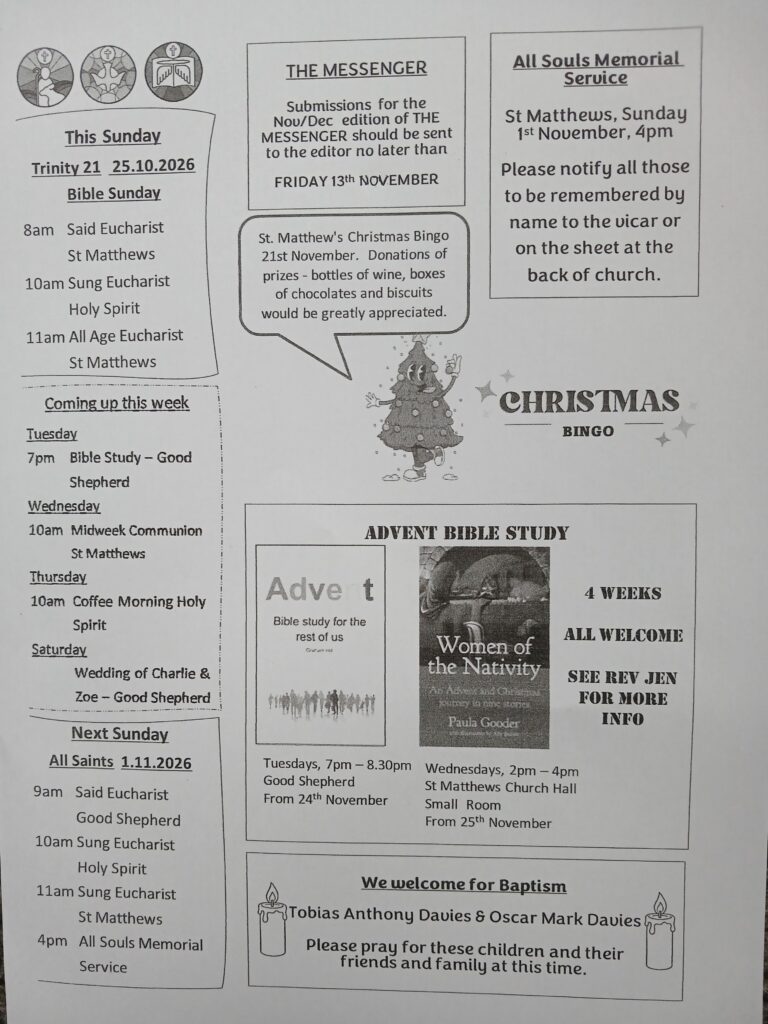
All Age Worship – Sunday 25 October 2026 at 11.00am – Eucharist – Bible Sunday
St Matthew’s Church – Sunday 18 October 2026 at 11.00am – Eucharist – Twentieth Sunday after Trinity – Luke the Evangelist
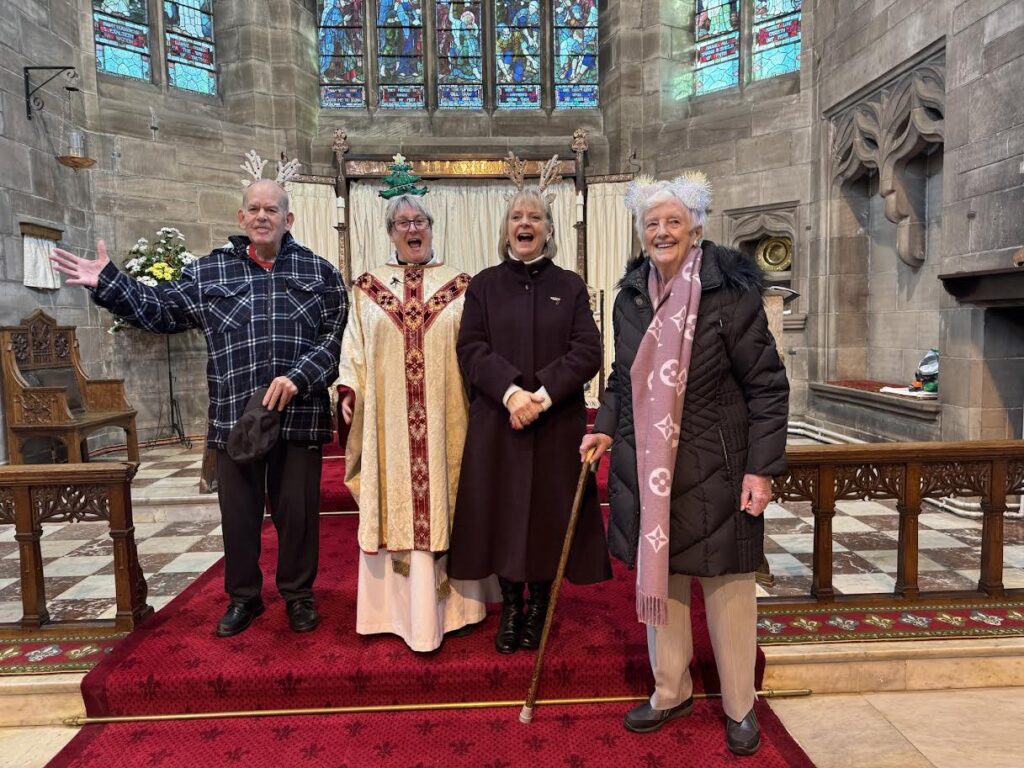
Come and join us for all age worship on Sunday 25 October 2026 where we will be searching for treasure and need your help! The Order of Service is below, which you can also download. The Reading Sheet for 25 October 2026 – Bible Sunday is also below. This will be used for the Said Eucharist at 8.00am but NOT for the 11.00am service.
COLLECT
Blessed Lord, who caused all holy Scriptures to be written for our learning: help us so to hear them, to read, mark, learn and inwardly digest them that, through patience, and the comfort of your holy word; we may embrace and for ever hold fast the hope of everlasting life, which you have given us in our Saviour Jesus Christ, who is alive and reigns with you, in the unity of the Holy Spirit, one God, now and for ever. Amen
FIRST READING – NEHEMIAH CHAPTER 8: VERSES 1 TO 4A [5 TO 6] AND VERSES 8 TO 12
A reading from the book of Nehemiah,
All the people gathered together into the square before the Water Gate, The told the scribe Ezra to bring the book of the law of Moses, which the LORD had given to Israel. Accordingly, the priest Ezra brought the law before the assembly,both men and women and all who could hear with understanding. This was on the first day of the seventh month. He read from it facing the square before the Water Gate from early morning until midday, in the presence of the men and women and those who could understand; and the ears of all the people were attentive to the book of the law.
The scribe Ezra stood on a wooden platform that had been made for the purpose; [And Ezra opened the book in the sight of all the people, for he was standing above all the people; and when he opened it, all the people stood up. Then Ezra blessed the LORD, the great God, and all the people answered, “Amen, Amen, ” lifting up their hands. Then they bowed their heads and worshipped the LORD with their faces to the ground.]
So they read from the book, from the law of God, with interpretation. They gave the sense so that the people understood the reading. And Nehemiah who was the governor, and Ezra the priest and scribe, and the Levites who taught the people said to all the people, “This day is holy to the LORD your God; do not mourn or weep.” For all the people wept when they heard the words of the law. Then he said to them, “Go your way, eat the fat and drink sweet wine and send portions of them to those for whom nothing is prepared, for this day is holy to our LORD; and do not be grieved, for the joy of the LORD is your strength.” So the Levites stilled all the people, saying, “Be quiet, for this day is holy; do not be grieved.” And all the people went their way to eat and drink and to send portions and to make great rejoicing, because they had understood the words that were declared to them.
This is the word of the Lord.
Thanks be to God.
PSALM 119 VERSES 9 TO 16
RESPONSE: Happy are they who walk in the law of the Lord.
How shall the young cleanse their way? By keeping to your words. With my whole heart I seek you; let me not stray from your commandments.
Happy are they who walk in the law of the Lord.
I treasure your promise in my heart, that I may not sin against you. Blessed are you, O Lord; instruct me in your statutes.
Happy are they who walk in the law of the Lord.
With my lips will I recite all the judgements of your mouth. I have taken greater delight in the way of your decrees than in all manner of riches.
Happy are they who walk in the law of the Lord.
I will meditate on your commandments and give attention to your ways. My delight is in your statutes; I will not forget your word.
Happy are they who walk in the law of the Lord.
SECOND READING – COLOSSIANS CHAPTER 3, VERSES 12 TO 17
A reading from the letter of Paul to the Colossians.
As God’s chosen ones, holy and beloved, clothe yourselves with compassion, kindness, humility, meekness, and patience. Bear with one another and, if anyone has a complaint against another, forgive each other; just as the Lord has forgiven you, so you also must forgive. Above all, clothe yourselves with love, which binds everything together in perfect harmony. And let the peace of Christ rule in your hearts, to which indeed you were called in the one body. And be thankful. Let the word of Christ dwell in you richly; teach and admonish one another in all wisdom; and with gratitude in your hearts sing psalms, hymns, and spiritual songs to God. And whatever you do, in word or deed, do everything in the name of the Lord Jesus, giving thanks to God the Father through him.
This is the word of the Lord.
Thanks be to God
GOSPEL – MATTHEW CHAPTER 24, VERSES 30 TO 35.
Listen to the gospel of our Lord Jesus Christ according to Matthew
Glory to you, O Lord
Jesus said to his disciples: “The sign of the Son of Man will appear in heaven, and then all the tribes of the earth will mourn, and they will see ‘the Son of Man coming on the clouds of heaven’ with power and great glory. And he will send out his angels with a loud trumpet call and they will gather his elect from the four winds, from one end of heaven to the other. From the fig tree learn its lesson: as soon as its branch becomes tender and puts forth its leaves, you know that summer is near. So also, when you see all these things, you know that he is near, at the very gates. Truly I tell you, this generation will not pass away until all these things have taken place. Heaven and earth will pass away, but my words will not pass away.”
This is the Gospel of the Lord.
Praise to you, O Christ.
POST COMMUNION
God of all grace, your Son Jesus Christ fed the hungry with the bread of his life and the word of his kingdom: renew your people with your heavenly grace, and in all our weakness sustain us by your true and living bread; who is alive and reigns, now and for ever.
Amen